


#1 doctor & pharmacist recommended brand
✔ Guaranteed authentic manufacturer products
✔ Full Manufacturer Warranty — Your purchase is fully protected
✔ Manufacturer Support — Access official service and customer assistance when needed
Compatible Accessories
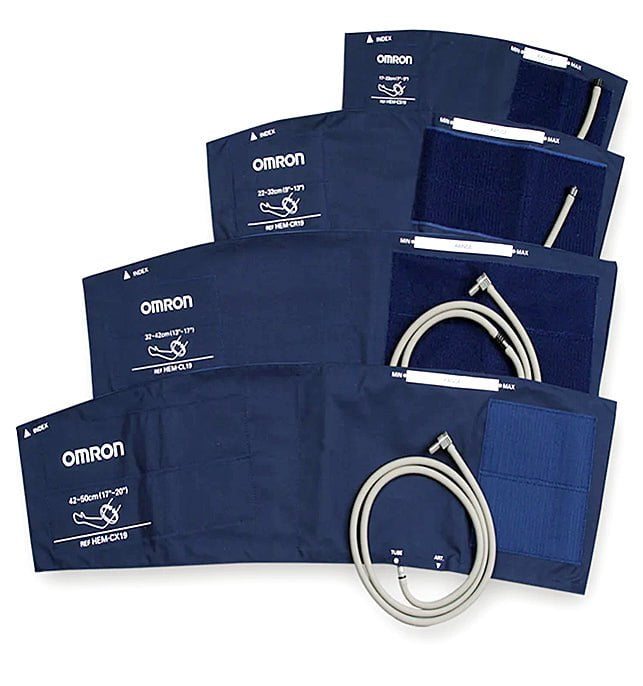
Omron Replacement Cuff Bladder Set for HEM-907XL Professional Blood Pressure Monitor – Genuine Omron Replacement Bladder

Wall Mount Kit for OMRON HEM-907XL Professional Blood Pressure Monitor
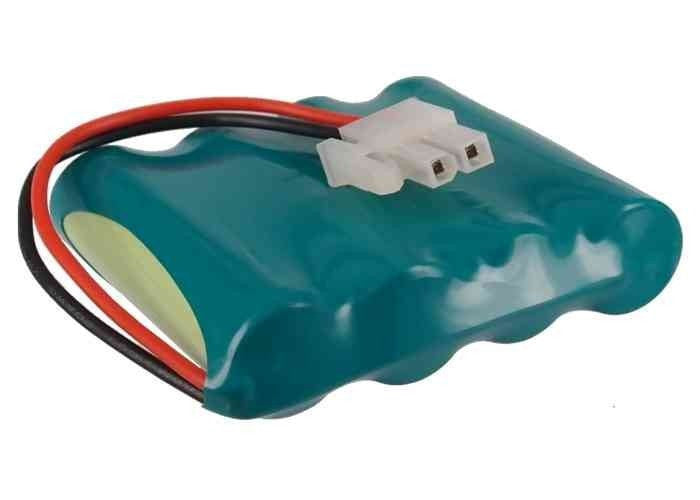
Omron HEM-907XL Replacement Battery Pack – Genuine Rechargeable Battery for HEM-907XL Professional Blood Pressure Monitor
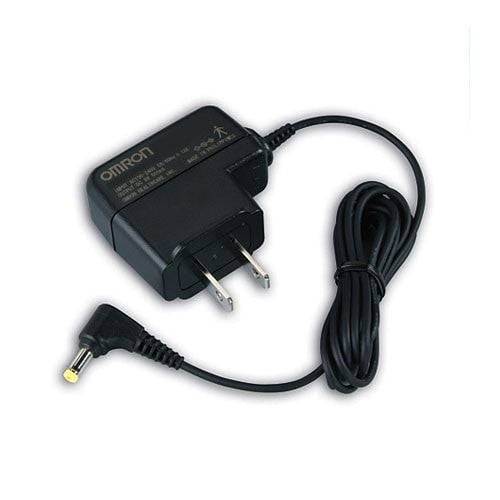
Omron Replacement AC Adapter for HEM-907XL
Omron HEM-907 IntelliSense Professional Digital Blood Pressure Monitor
The Omron 907 is the clinical standard for professional blood pressure monitoring. 4 cuff sizes, average mode, hide mode, oscillometric + auscultatory measurement, 100-reading memory, and 5-year warranty. Made in Japan.
Our Take: The HEM-907XL is Omron’s professional clinical blood pressure monitor — built for physician’s offices, hospitals, nursing facilities, and research environments, not for home use. At $699.99 (or $844.99 with the mobile floor stand), it’s a serious clinical instrument that has been validated in NHANES and used in the landmark SPRINT Trial. You get four cuff sizes in the box (Small through Extra Large), automatic averaging of up to 3 readings, a hide mode that conceals results from the patient to reduce white coat effect, both oscillometric and auscultatory measurement capability, a 100-reading memory, and dual power options (AC adapter + rechargeable battery pack). This is the monitor trusted by clinicians worldwide for accurate, repeatable blood pressure assessment across the full range of patient arm sizes.
Why you’d choose this monitor
- Designed for physician’s offices, hospitals, nursing facilities, and research. NOT a consumer home monitor. Used in NHANES and the SPRINT Trial. Clinically validated against mercury sphygmomanometers.
- Ships with Small (7″–9″), Medium (9″–13″), Large (13″–17″), and Extra Large (17″–20″) cuff and bladder sets. Covers virtually every adult arm size in clinical practice.
- Automatically takes up to 3 consecutive readings and averages them for more accurate diagnosis. Configurable intervals between readings. Single-reading mode also available.
- Automatic oscillometric mode for standard clinical use. Manual auscultatory mode with sophisticated cuff pressure control for stethoscope-based measurement when clinically indicated.
- Conceals blood pressure values from the patient during measurement. Reduces white coat effect and patient anxiety. Results recorded by the clinician after measurement is complete.
- Stores up to 100 readings on-device. Sufficient for high-volume clinical screening. No Bluetooth or app — this is a standalone clinical instrument.
- Includes both an AC adapter for wall power and a rechargeable battery pack for portable use. Both are in the box. Reliable power in any clinical environment.
- 5-year manufacturer warranty on the monitor. 1-year warranty on cuffs and bladders. Manufactured in Japan with Omron’s IntelliSense technology. Backed by 50+ years of Omron precision.
Tip: Tab to a reason and press Enter to expand the explanation. Press Escape to close.
Who this monitor is designed for
- Physician’s offices and primary care clinics that need a reliable, automated BP monitor.
- Hospitals, emergency departments, and nursing facilities requiring high-volume patient screening.
- Clinical research environments that need a validated, standardized measurement instrument.
- Healthcare professionals who need auscultatory (stethoscope) measurement capability alongside automated readings.
- Any clinical setting that sees a wide range of patient arm sizes (Small through Extra Large cuffs included).
Looking for a home monitor instead?
- Basic connected home monitoring → BP7150 (3 Series) at $57.83
- Home monitor with AFib screening → BP7360 (7 Series) at $87.43
- Every consumer feature Omron offers → BP7465 (10 Series) at $99.99
Specifications
| Feature | Detail |
|---|---|
| Model / MPN | HEM-907XL |
| Brand | Omron Healthcare |
| Category | Professional / Clinical |
| Type | Upper arm, automatic, oscillometric + auscultatory |
| Measurement Range | SYS: 0–280 mmHg; Accuracy: ±3 mmHg or 2% |
| Pulse Range | 40–180 bpm; Accuracy: ±5% |
| Average Mode | Up to 3 readings (configurable intervals) |
| Hide Mode | Yes (conceals readings from patient) |
| Memory | 100 readings |
| Cuffs Included | Small (7″–9″), Medium (9″–13″), Large (13″–17″), XL (17″–20″) |
| Power | AC adapter (included) + rechargeable battery pack (included) |
| Connectivity | None (standalone clinical instrument) |
| Irregular Pulse | Yes (flags >25% variation from average) |
| Dimensions | 5½″ W × 5½″ L × 8″ H |
| Weight | ~2.4 lbs (1.1 kg) |
| Warranty | 5 years (monitor), 1 year (cuffs) |
| Made In | Japan |
| Standards | AAMI SP10, IEC 60601-1, IEC 60601-1-2 |
| UPC | 073796907426 |
Variant Reference
| Configuration | MPN | MSRP | Price |
|---|---|---|---|
| Blood Pressure Unit | HEM-907XL | $825.00 | $699.99 |
| Blood Pressure Unit with Stand | HEM-907XL + Stand | $984.99 | $844.99 |
CA Residents: Prop 65 Warning
We work hard to keep product information accurate. If you spot an error, email us at sales@hrmusainc.com — we appreciate it.
HEM-907XL — Frequently Asked Questions
What is the Omron HEM-907XL designed for?
The HEM-907XL is a professional-grade blood pressure monitor designed for clinical use in physician’s offices, hospitals, nursing facilities, research environments, and other point-of-care settings. It is NOT a consumer home monitor. It uses oscillometric measurement with optional auscultatory (stethoscope) mode. It has been used in major clinical trials including the SPRINT Trial and validated against mercury sphygmomanometers in NHANES.
What cuff sizes are included with the HEM-907XL?
The HEM-907XL includes four cuff and bladder sets: Small (HEM-907-CS19, 7″–9″ / 17–22 cm), Medium (HEM-907-CM19, 9″–13″ / 22–32 cm), Large (HEM-907-CL19, 13″–17″ / 32–42 cm), and Extra Large (HEM-907-CXL19, 17″–20″ / 42–50 cm). All four sizes are included in the box. Replacement cuffs are available separately.
Can the HEM-907XL average multiple readings?
Yes. The average mode automatically takes up to 3 consecutive readings and displays the average for a more accurate diagnosis. You can also configure the interval between readings. Single-reading mode is also available.
How is the HEM-907XL powered?
The HEM-907XL includes an AC adapter for continuous wall power and a rechargeable battery pack for portable use. Both are included in the box. The battery pack allows the monitor to function during power outages or in locations without wall outlets.
Does the HEM-907XL have a “hide” mode?
Yes. The hide mode conceals blood pressure values from the patient’s view during measurement. This reduces patient anxiety (white coat effect) and is useful in clinical trials or settings where the clinician wants to record results without the patient seeing the numbers in real time.
Is the HEM-907XL compatible with consumer Omron cuffs?
No. The HEM-907XL uses its own proprietary cuff and bladder sets (HEM-907 series). It is NOT compatible with consumer D-ring cuffs (HEM-RML31-B), ComFit cuffs (HEM-FL31-B), or any other consumer Omron cuffs. Only HEM-907 series cuffs work with this monitor.
What is the warranty on the HEM-907XL?
The HEM-907XL carries a 5-year warranty on the monitor unit. Cuffs and bladders carry a 1-year warranty. The warranty extends only to the original purchaser and applies to products purchased from authorized Omron resellers. Made in Japan.
Need help choosing? Call us at 1-800-403-8285 or 215-259-2700. Our team is happy to help you find the right monitor.